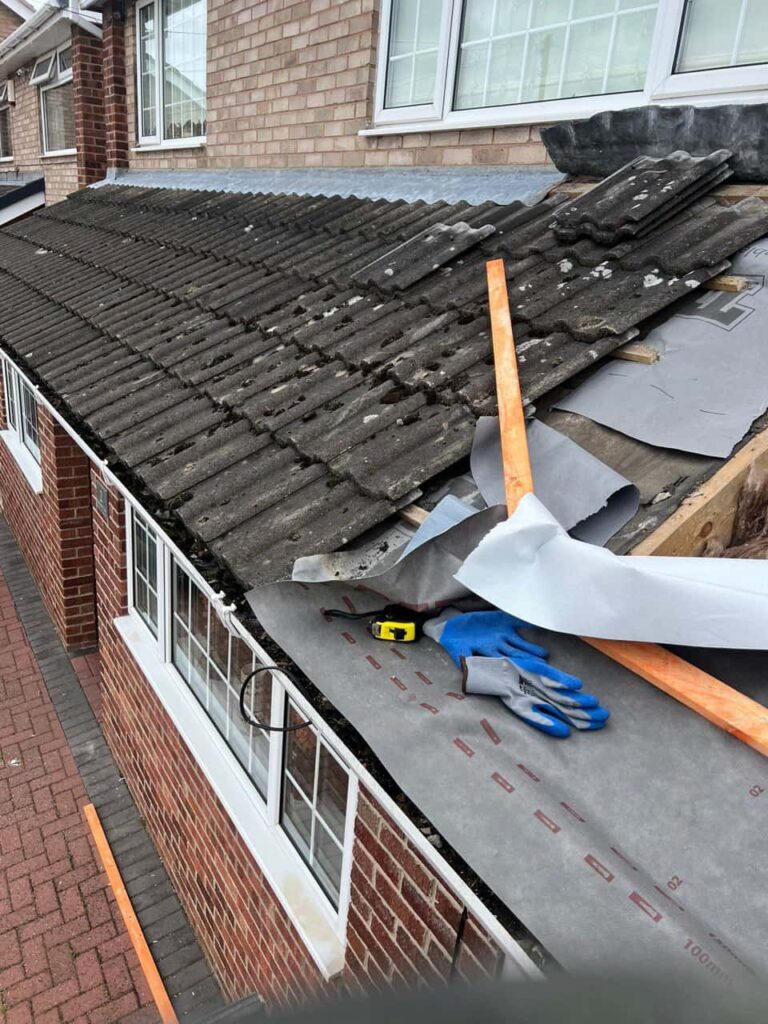
A roof leak rarely remains confined to the point where water first enters. Moisture can travel beneath tiles, across underlay and along roof timbers before becoming visible inside the property. By the time a ceiling stain appears, more than one roofing component may already have been exposed.
Arranging an early professional assessment helps identify the entry point while the defect may still be localised. A suitable repair can restore the affected area and reduce the likelihood of water damaging the wider roofing system.
Why Prompt Roof Leak Repairs Matter
A Small Defect Can Expose Several Roof Layers
A pitched roof is a complete system rather than a single waterproof surface. Tiles or slates form the primary covering, while underlay, battens, flashing and structural timbers provide support and additional protection.
Water may enter through a relatively small defect, such as:
- A cracked or slipped tile
- Damaged lead flashing
- Deteriorated ridge or verge details
- A blocked or damaged valley
- A failed seal around a roof penetration
- Torn or ageing underlay
- A localised defect in a flat roof covering
Once moisture passes the outer covering, it can reach several other components. Repairing the original defect promptly helps protect these less visible parts of the roof.
Early Repairs Help Protect the Underlay
Roofing underlay provides secondary protection if small amounts of water pass beneath the tiles or slates. It is not intended to withstand continuous exposure caused by an unresolved leak.
Repeated wetting can affect weakened, torn or ageing underlay. Water may then pass through gaps, fixing points or sagging sections and enter the roof space.
Correcting the external defect early reduces the amount of moisture reaching this layer and may prevent a straightforward repair from developing into more extensive work.
Battens Can Be Affected by Persistent Moisture
Roof battens support tiles and help maintain their correct spacing. Although they are concealed, their condition is important to the stability of the roof covering.
If a leak repeatedly wets a batten, the timber may gradually deteriorate. Tiles in the affected area can then become less secure or move out of alignment, creating further openings for rainwater.
An early inspection can establish whether the batten remains sound or needs attention as part of the repair.
Roof Timbers Need to Remain Dry
Rafters, joists and other structural timbers are designed to operate in a protected roof space. Prolonged moisture exposure can cause staining, distortion and deterioration.
The internal damp patch may appear small even when water has travelled across a larger timber area. This is why the source should be investigated rather than judging the seriousness of the problem from the visible mark alone.
Stopping the leak early gives affected materials the opportunity to dry and limits continued exposure.
Insulation Can Hold Moisture
Water entering the roof space may be absorbed by insulation before it reaches the ceiling. This can delay the appearance of obvious internal signs and make the extent of the problem difficult to assess.
Wet insulation may hold moisture against surrounding materials and become less effective. It can also spread water over a broader area than the original leak.
A professional inspection can check the roof space and determine whether the insulation and adjacent components have been affected.
Nearby Tiles Can Become Vulnerable
A displaced tile may alter the overlap with neighbouring tiles or expose their edges to wind. Similarly, a damaged fixing or weakened batten may allow movement to spread across the surrounding section.
Repairing the first visible tile without examining nearby materials could leave related weaknesses unresolved. A proper assessment considers the surrounding covering as well as the apparent point of entry.
This helps prevent one localised defect from contributing to further tile movement or water ingress.
Flashing and Junctions Can Deteriorate Further
Chimneys, valleys, abutments and roof penetrations rely on carefully formed details to direct water away. Small gaps in flashing or seals can admit water during wind-driven rain.
If the defect remains open, repeated weather exposure may enlarge it or affect the materials immediately around the junction. Prompt repairs can restore the detail before deterioration spreads into the adjoining roof covering or masonry.
Leaks Can Become Harder to Trace Over Time
Water does not always appear directly beneath the point where it enters. It may follow underlay, rafters or pipework before dripping into the property.
As moisture spreads and creates additional stains, identifying the original defect can become more complicated. Early investigation provides clearer evidence about when and where the leak occurs.
Roofers may assess:
- The position and pattern of internal dampness
- Moisture within the loft or roof space
- The condition of nearby tiles or slates
- Flashing, valleys and roof junctions
- Underlay and battens where accessible
- Gutters and drainage routes
This methodical approach reduces the risk of repairing the wrong area.
Prompt Action Can Keep Repairs Localised
Many roof leaks can be resolved through targeted work when the cause is found early and the surrounding materials remain serviceable.
Depending on the defect, this may involve replacing or securing roof coverings, renewing a flashing detail, repairing a localised membrane defect or clearing an obstructed drainage route.
If water continues entering, however, the repair may eventually need to address underlay, battens, insulation and internal materials as well. Acting promptly helps preserve more of the existing roofing system.
Signs That Should Be Investigated
Professional assessment is advisable if you notice:
- A new stain on a ceiling or wall
- Dampness in the loft
- Wet or discoloured roof timbers
- Dripping during rainfall
- A musty smell near the roof space
- Slipped, cracked or uneven tiles
- Water marks around a chimney or roof junction
- A leak that appears only during certain weather conditions
Even if the sign disappears after the rain stops, the entry point may remain open.
Conclusion
Early roof leak repairs protect more than the visible surface. They help prevent water from reaching the underlay, battens, insulation, roof timbers and neighbouring sections of the covering.
Borrowash Roofing Repairs provides professional leak detection and roof repairs in Borrowash, Derbyshire. If you have noticed dampness, staining or a visible roof defect, contact our team to arrange an assessment before the problem spreads.
Call us on: 01332 215 195
Click here to find out more about Borrowash Roofing Repairs
Click here to complete our contact form and see how we can help with your roofing needs.