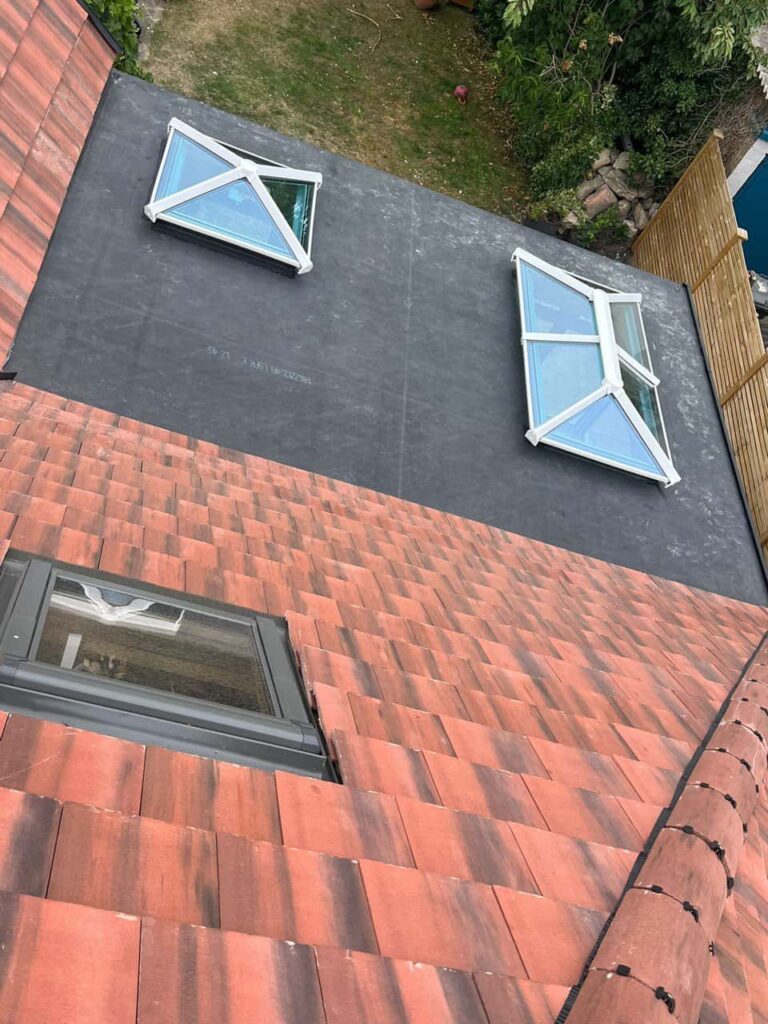
Significant storm damage can leave homeowners facing an important question: is an older roof still worth repairing, or has the damage reached the point where more extensive work is necessary? Age is certainly relevant, but it should never be the only factor used to make that decision.
For homeowners in Borrowash, Derbyshire, the condition of the roof before the storm, the extent of the new damage and the condition of the materials beneath the visible covering all need to be considered. Some older roofs remain perfectly suitable for repair, while others may already contain widespread deterioration that makes repeated localised work less dependable.
How Do You Decide Whether an Older Storm-Damaged Roof Can Be Repaired?
The most useful starting point is a thorough assessment of the entire affected area. Storm damage may be concentrated around several displaced tiles, damaged ridge sections or a particular roof slope, but it can also expose weaknesses that were developing before the severe weather arrived.
A professional inspection should therefore distinguish between damage caused directly by the storm and deterioration that was already present. This provides a much clearer picture of whether repairing the affected areas can restore reliable performance.
Roof Age Does Not Automatically Mean Replacement
An older roof should not be considered beyond repair simply because it has been in place for many years.
Roofing materials do not all deteriorate at exactly the same rate. One established roof may remain generally sound apart from a storm-damaged section, while another may have widespread weaknesses across several components.
Present condition is more important than age alone. If the surrounding roof covering and supporting materials remain serviceable, repairing storm damage can still be an appropriate solution.
The Extent of the Storm Damage Is Important
There is a considerable difference between several displaced tiles and damage affecting a substantial proportion of the roofing system.
Storms can disturb tiles or slates, damage ridge and hip details, expose underlay and affect flashing around vulnerable junctions. The affected areas need to be identified accurately so that the true scope of the problem is understood.
Where damage is clearly localised, targeted repairs may be sufficient. Where several important parts of the roof have been compromised, a broader assessment becomes increasingly important.
Check Whether the Surrounding Tiles or Slates Remain Sound
A successful repair needs dependable roofing materials around it.
If replacement tiles or slates are being integrated into an older roof, the surrounding covering needs to remain sufficiently secure and serviceable. Repairing one section becomes less effective if neighbouring materials are already loose, heavily deteriorated or beginning to fail.
This is why an inspection should extend beyond the most obvious storm damage. The condition of adjoining areas helps determine whether a local repair will provide a reliable result.
Storms Can Expose Existing Weaknesses
Strong winds and heavy rainfall do not always create every roofing defect found afterwards. In some cases, severe weather reveals weaknesses that were already developing.
Ageing fixings, deteriorating mortar, weakened battens or previously loose coverings may become obvious when subjected to greater wind pressure. A tile displaced during a storm, for example, may have been less securely supported beforehand.
Understanding this distinction matters because simply replacing the visible damaged component may leave the original weakness unresolved.
Supporting Materials Need to Be Considered
Tiles and slates are only the visible part of a pitched roofing system.
Battens, underlay and other supporting components also influence how effectively the roof performs. If storm damage has exposed these areas, their condition should be checked before the roof covering is reinstated.
An older roof may have perfectly serviceable supporting materials beneath the damaged section. Alternatively, opening the area may reveal deterioration that changes the amount of work required.
A reliable repair should respond to what is actually found rather than concentrating solely on the external appearance.
Water Ingress Can Extend Beyond the Visible Damage
Storm damage that creates an opening in the roof covering can allow rainwater beneath the surface.
The location where moisture eventually becomes visible inside the property may not be directly beneath the damaged tile or slate. Water can travel along roofing components before appearing internally.
For this reason, the investigation should consider both the external damage and any signs of moisture penetration. Establishing how far water has travelled helps ensure that affected materials are not overlooked during repair work.
Ridge and Hip Damage Can Require Wider Attention
Ridges and hips are particularly exposed parts of many pitched roofs.
If storm conditions disturb these areas, individual components may become loose while neighbouring sections still appear to be in position. The complete affected run should therefore be checked rather than simply correcting the most visibly displaced component.
A secure repair needs to restore the stability of the roof detail as a whole.
Flashing and Junctions Should Be Inspected
Roof junctions can also be vulnerable during severe weather.
Flashing around changes in the roof structure needs to remain correctly positioned so that rainwater is directed away from vulnerable areas. If movement has occurred, even a relatively small opening can create a route for moisture.
When an older roof has suffered significant storm damage, checking these details alongside the main roof covering provides a more complete assessment.
Previous Repairs Can Provide Useful Information
An older roof may already contain several repaired areas, and their condition can help indicate how the roof has been performing.
Well-executed previous repairs that remain secure are not necessarily a concern. However, repeated repairs concentrated within the same section can suggest that deterioration has been developing for some time.
If storm damage occurs in an area with a history of recurring problems, it is sensible to investigate whether another isolated repair will address the underlying condition.
Is the Damage Confined to One Roof Slope?
Significant damage does not always affect the complete roof equally.
One roof slope may have taken the greatest impact while other sections remain sound. If there is a clear distinction between the storm-damaged area and serviceable roofing elsewhere, substantial sectional repair may still be possible.
The important consideration is whether the retained parts of the roof can continue performing reliably once the damaged section has been restored.
When Does Repair Become Less Suitable?
Repair becomes less convincing when storm damage is combined with widespread pre-existing deterioration.
If numerous tiles or slates are already failing, several roof details require attention and supporting components have deteriorated across a broad area, concentrating solely on the latest storm damage may not restore dependable overall performance.
Similarly, if repairs are becoming increasingly frequent across different sections, the roof should be considered as a complete system rather than as a collection of unrelated defects.
This does not mean that every older storm-damaged roof requires replacement. It means that the wider condition needs to guide the decision.
Why Repeated Small Repairs Are Not Always the Best Approach
Localised repairs are valuable when problems are genuinely localised. They become less effective when deterioration is widespread.
Repeatedly replacing individual components on a roof that is failing in several areas can make it difficult to achieve consistent reliability. Each repair may correct one problem while another weakness develops nearby.
A professional assessment can determine whether there is enough sound existing roofing to make further targeted work sensible.
Can a Large Section Be Repaired Without Replacing the Entire Roof?
In some circumstances, yes.
If storm damage has affected a defined section while the remainder of the roof is in serviceable condition, it may be possible to carry out more substantial sectional work. This can involve removing damaged materials, inspecting the construction beneath and correctly reinstating the affected area.
The new work must integrate properly with the roof that remains. Sound transitions between repaired and existing sections are essential to maintaining weather resistance.
A Professional Inspection Helps Avoid Assumptions
Storm damage can look dramatic from ground level, particularly when several tiles have moved or part of the roof covering is visibly disturbed. Appearance alone does not reveal the complete condition of the roofing system.
At Borrowash Roofing Repairs, we assess the storm-damaged area alongside the wider condition of the roof. For properties in Borrowash, Derbyshire, this helps establish whether the damage remains suitable for repair or whether existing deterioration means that a more comprehensive approach should be considered.
The aim is to recommend work according to the condition of the roof rather than assuming that age or storm damage automatically determines the answer.
The Objective Should Be Reliable Roof Performance
Whether an older roof receives a localised repair, substantial sectional work or more extensive attention, the objective should be the same: restoring dependable protection to the property.
This means correcting the cause of weaknesses, replacing damaged materials where necessary and ensuring that repaired areas integrate properly with the surrounding roofing system.
A repair that merely improves the visible appearance without addressing weakened components beneath or alongside the damaged area is unlikely to provide the same level of confidence.
Conclusion
An older roof can often be repaired after significant storm damage, provided that enough of the existing roofing system remains sound. Age alone does not determine whether repair is worthwhile. The extent of the storm damage, condition of surrounding tiles or slates, supporting materials, previous repairs and evidence of wider deterioration all need to be considered.
Where damage is confined to a defined area, professional repairs may restore reliable performance while retaining serviceable parts of the roof. Where the storm has exposed widespread deterioration, a more comprehensive solution may be appropriate.
If your older roof has suffered significant storm damage in Borrowash, Derbyshire, contact Borrowash Roofing Repairs. We can assess the affected area and the wider roof condition, identify what requires attention and recommend an appropriate roofing solution without suggesting unnecessary work.
Call us on: 01332 215 195
Click here to find out more about Borrowash Roofing Repairs
Click here to complete our contact form and see how we can help with your roofing needs.